How Santiago's Transport Crisis Led Us to Today's Multi-Billion Dollar Overhaul
Decades of underinvestment and political delays have created the perfect storm forcing the city's most ambitious infrastructure push in a generation.
Decades of underinvestment and political delays have created the perfect storm forcing the city's most ambitious infrastructure push in a generation.
Santiago's current transport revolution didn't emerge overnight. It's the culmination of thirty years of deferred maintenance, population explosions, and false starts that transformed the city's commute into one of Latin America's most gruelling daily ordeals.
The crisis became undeniable around 2015, when the Metro system—which carries 2.3 million passengers daily across its six lines—began showing its age. Built primarily in the 1980s and 1990s, the network was designed for a city of five million. Today, the metropolitan area exceeds seven million residents, with projections reaching 8.5 million by 2035. During rush hours on the L1 and L5 lines serving Providencia and Maipú, crowding regularly exceeds safe capacity by 40 percent.
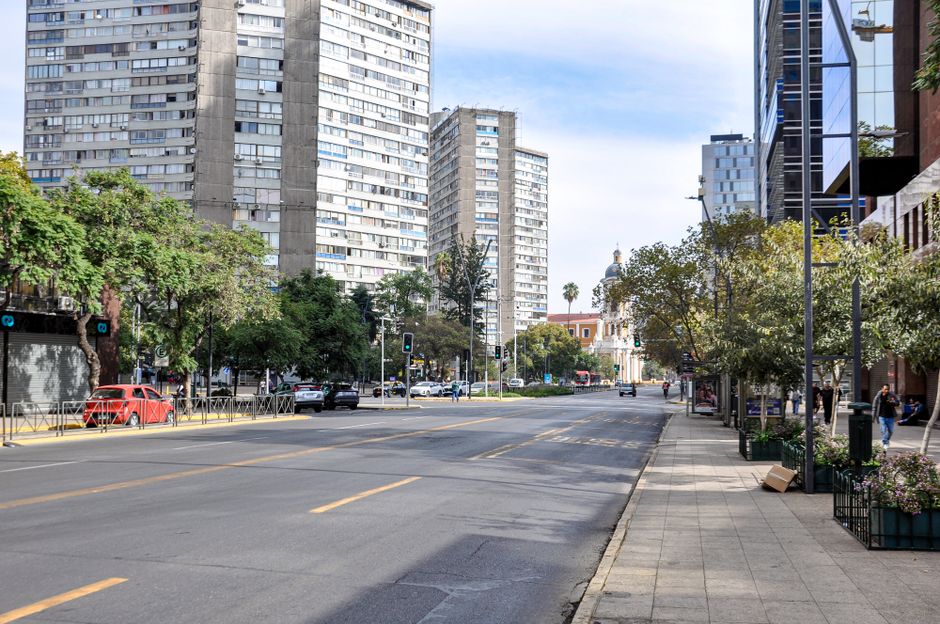
The road network tells a similar story. Avenida Libertador Bernardo O'Higgins, the city's historic spine connecting downtown to the southern suburbs, became chronically congested as bus rapid transit infrastructure aged. Traffic volumes doubled between 2000 and 2020, while the highway system expanded minimally. The Costanera Norte highway, completed in 1999, was already operating above design capacity by 2010.
Political fragmentation compounded these problems. Between 2006 and 2022, five different administrations pursued competing visions for transport development. The Transantiago bus system, launched in 2007 with international fanfare, never achieved its efficiency targets, costing the municipal government over 800 million pesos annually in subsidies while commute times remained stubbornly high. Public frustration peaked during the 2019 demonstrations, when transport costs and system reliability became central grievances.
Real estate pressures accelerated the urgency. Commercial developments in Las Condes and Ñuñoa attracted hundreds of thousands of workers, yet transport capacity to these neighbourhoods lagged years behind demand. Peak hour congestion in the Paseo Ahumada area regularly generated 90-minute commutes from outer communes like San Bernardo and Pudahuel.
The turning point came in 2023, when a cross-party commission released data showing that transport inefficiency cost Santiago's economy approximately 1.2 percent of regional GDP annually—roughly 4.8 billion pesos in lost productivity. That figure finally mobilised investment. The current infrastructure programme, valued at over 24 billion pesos, now targets Metro line extensions to Colina and Puente Alto, the modernisation of the Transantiago fleet, and new dedicated bus corridors across Avenida Apoquindo and Avenida Tobalaba.
The projects now underway represent not visionary planning, but rather emergency response to decades of neglect. Understanding this context explains why the disruptions are so severe, and why completion timelines stretch to 2029—the city is essentially trying to catch up with its own growth.
This article was compiled by AI from the sources linked above and screened before publishing. See our editorial standards.
How does this story make you feel?
Spread the word
About this article
Published by The Daily Santiago
Daily brief
Free, in your inbox before 7am. Weekdays.
More in News