Santiago Property Records: 340K Duplicates Found
Audit reveals 340,000+ duplicate images in Santiago's digitized property and urban planning records, complicating housing data access during Chile's ongoing crisis.
Audit reveals 340,000+ duplicate images in Santiago's digitized property and urban planning records, complicating housing data access during Chile's ongoing crisis.
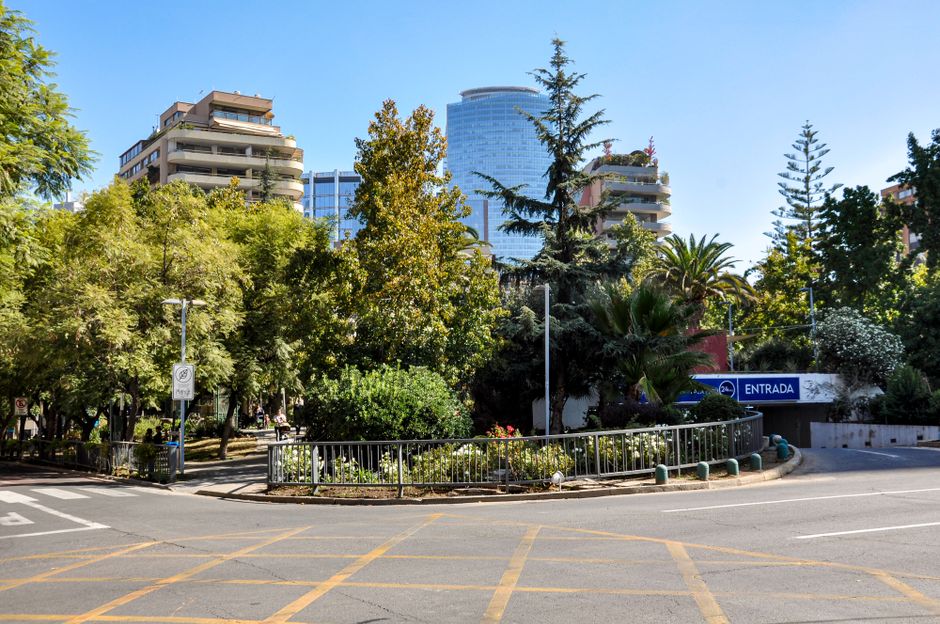
More than 340,000 digitised property and urban planning documents held by Santiago municipal archives contain at least one duplicate image file, according to an audit completed in June 2026 by the Biblioteca Nacional de Chile and the Secretaría Regional Metropolitana de Vivienda y Urbanismo. The figure, drawn from a cross-referencing exercise covering records dating back to 1998, points to a systemic problem that has quietly ballooned as Chile's capital rushed to digitise its administrative infrastructure over the past decade.
The timing matters. Santiago's housing crisis has pushed local government agencies to rely more heavily on digital cadastral records than at any previous point. With average asking prices for apartments in Providencia reaching 85,000 UF per square metre in the first quarter of 2026, up sharply from five years ago, any ambiguity in property documentation carries real financial and legal consequences for buyers, sellers and the Conservador de Bienes Raíces de Santiago, the official registry on Agustinas street in the city centre that processes tens of thousands of title transfers annually.
The audit identified three particular pressure points. The Municipalidad de Santiago's Dirección de Obras Municipales, whose public counter sits on Av. Ricardo Cumming, holds an estimated 87,000 construction permit scans in which the same image appears under two or more file identifiers. The Sistema de Información Territorial Metropolitano, a joint platform managed by the Ministerio de Vivienda's regional office in Barrio Yungay, logged a further 124,000 duplicate entries across its aerial photograph archive stretching from Pudahuel to Puente Alto. The remaining duplicates are scattered across borough-level records in communes including Maipú, La Florida and Ñuñoa.
Duplicate images are not a trivial technical nuisance. Each redundant file inflates storage costs, slows search queries and, critically, can generate conflicting metadata, meaning two scans of the same document may carry different timestamps, ownership annotations or zoning codes. In a city where more than 15,000 Venezuelan and Haitian immigrants filed formal housing applications through Santiago's Programa de Integración Social between January and May 2026, inaccurate records create bottlenecks that directly delay access to subsidised rental assistance under the DS19 programme.
The June audit used a perceptual hashing algorithm, a technique that converts images into compact numerical fingerprints and flags near-identical matches, across a combined archive of approximately 2.1 million scanned files. The 340,000-plus duplicates represent roughly 16 percent of the total corpus. Within that subset, about 9 percent were not exact copies but near-duplicates: rescanned versions of the same original page at different resolutions, often created when a document was digitised a second time following a quality-control rejection.
Storage costs offer a concrete measure of the waste involved. The Secretaría Regional estimates that eliminating confirmed duplicates would free up 4.7 terabytes of server capacity currently hosted at the government data centre on Av. Bulnes, translating to an annual infrastructure saving of approximately CLP 18 million. That figure is modest against a metropolitan IT budget running into the billions of pesos, but analysts working on the Boric administration's Plan Digital Chile 2025-2030 framework have pointed to duplicate-image bloat across all Chilean public institutions as a cumulative drag worth addressing before the country migrates to a unified national cadastre platform, currently scheduled for a pilot launch in Valparaíso and Santiago in the second half of 2027.
Municipal archivists at the Centro Metropolitano de Documentación on Av. Libertador Bernardo O'Higgins are now trialling a semi-automated deduplication workflow on a batch of 50,000 files from La Florida's DOM. If the pilot clears validation by September 2026, the Secretaría Regional intends to roll the process out commune by commune, starting with the five boroughs, Santiago Centro, Providencia, Las Condes, Maipú and Puente Alto, that account for the highest volume of property transactions. Citizens with pending permits or title queries are advised to cross-check document reference numbers directly with the Conservador de Bienes Raíces before assuming that digitally retrieved scans represent the authoritative version of any record.
How does this story make you feel?
Spread the word
About this article
Published by The Daily Santiago
Daily brief
Free, in your inbox before 7am. Weekdays.
More in News


