news
Santiago's Public Archive Lost Years of Visual History-Here's the Plan
A systematic failure to manage digital image records has left municipal databases riddled with duplicates, corrupted files, and orphaned photographs, erasing institutional memory one pixel at a time.
How we reported this
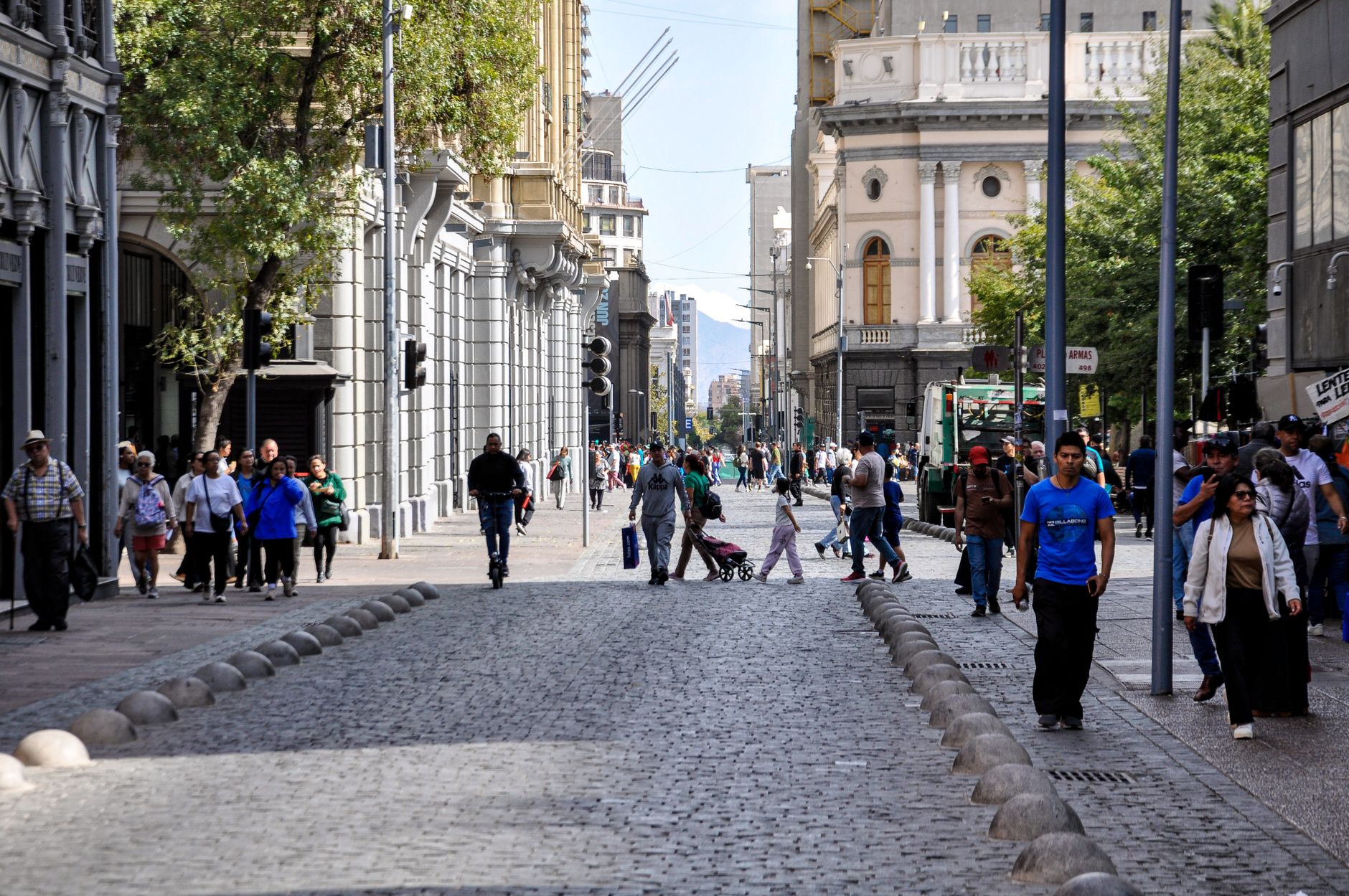
The Municipalidad de Santiago holds tens of thousands of digital images documenting three decades of urban transformation, demolitions in Barrio Yungay, the expansion of Parque Bustamante, the renovation of the Mercado Central façade. A growing share of those records are now functionally useless. Duplicate files, mismatched metadata, and corrupted replacements have quietly consumed server space and buried authentic originals under layers of redundant copies, according to archivists who work inside the system.
The problem matters acutely right now because the Boric administration's urban renewal agenda, which includes housing densification corridors along Avenida Matta and expanded public space projects in Estación Central, depends on accurate historical baselines. Without verified before-and-after visual documentation, environmental impact assessments and heritage protection claims become exercises in guesswork. The timing, with pension reform negotiations consuming legislative bandwidth and copper royalty debates pulling ministerial attention, has meant the archival crisis received almost no political oxygen for the better part of two years.
A Problem Built Over Many Administrations
The roots go back to at least 2009, when the Municipalidad first migrated paper photograph collections to a digital asset management system. The migration was never completed cleanly. Files were scanned at inconsistent resolutions, named with ad-hoc conventions, and distributed across at least three separate servers, one administered by the municipality's Dirección de Obras, one by the Consejo de Monumentos Nacionales office operating out of Calle Alameda, and a third maintained by the Secretaría Comunal de Planificación.
Each subsequent technology refresh, roughly every four to five years, produced a new round of bulk imports without deduplication protocols. By 2019, internal estimates placed the proportion of genuinely unique image files at below 40 percent of total stored assets. The rest were duplicates, near-duplicates with minor compression differences, or replacement files that had been uploaded to patch errors but never linked to their originals, effectively creating ghost records. Staff at the Centro de Documentación on Paseo Ahumada have described the situation informally as managing a library where three copies of every book have different catalogue numbers and two of them are blank inside.
Immigration pressure since 2021 intensified the problem indirectly. The surge of Venezuelan and Haitian residents into comunas like Estación Central and Recoleta generated urgent demand for permit documentation and neighbourhood mapping. Municipal staff redirected resources toward processing current caseloads rather than auditing historical archives. The backlog compounded.
The Standardisation Push and What It Will Require
A proposal circulating inside the Ministerio de las Culturas, las Artes y el Patrimonio since early 2025 would establish a unified metadata standard for all Chilean municipal image archives, modelled loosely on frameworks used by institutions including the Biblioteca Nacional de Chile on Avenida Libertador Bernardo O'Higgins. The proposal calls for a two-phase audit: first, automated deduplication using hash-matching software to flag identical files regardless of filename; second, manual review by trained archivists for near-duplicates where image content differs but records are conflated.
The estimated cost for Santiago's municipal archive alone runs into several hundred million pesos for the audit phase, according to figures discussed in a 2024 working group convened by the Consejo de Monumentos Nacionales, a sum that has not been formally budgeted. Phase two, the manual review, would require hiring contract archivists for a minimum of 18 months.
For residents and researchers, the practical consequence in the interim is real. Heritage advocates filing objections to demolition permits in neighbourhoods like Brasil and Concha y Toro cannot always access verified photographic records proving a structure's historical condition at a specific date. Lawyers handling property disputes along the densification corridors face the same gap. Until a deduplication and verification process is formally funded and launched, the archive will continue to grow in volume while shrinking in reliability. The municipalidad's next budget cycle, expected to be presented to the Concejo Municipal in October 2026, is the earliest realistic moment for a formal funding allocation to appear on the agenda.