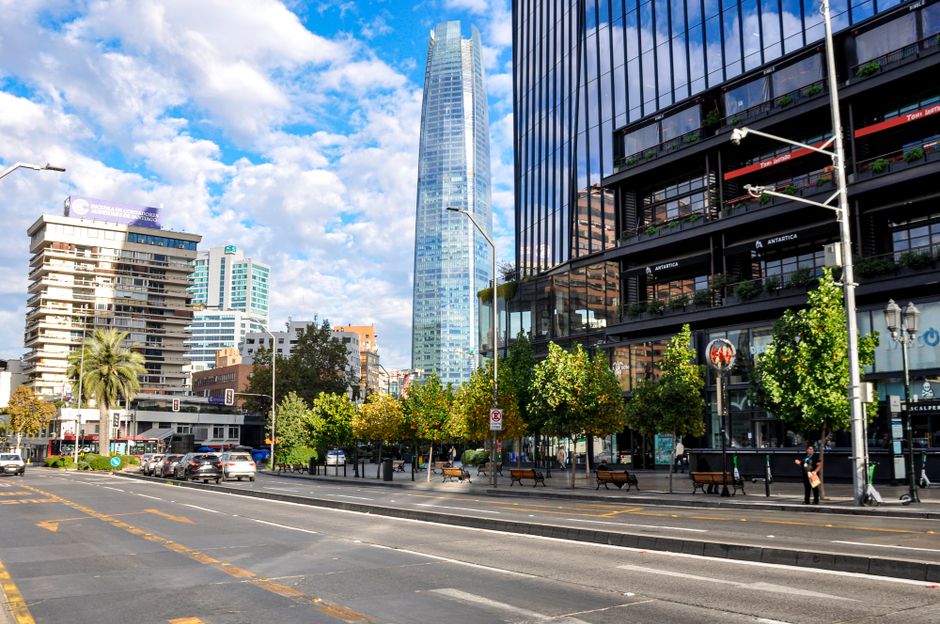
For decades, Santiago's wealth has clustered predictably: Las Condes towers and Vitacura's established eastern reaches. But a subtle shift is reshaping the city's luxury geography. Property professionals tracking the high-end market are increasingly watching Vitacura's western boundary—particularly the stretch between Avenida Santa María and Avenida Manquehue—where a confluence of cultural investment, urban renewal, and scarcity is creating unexpected momentum.
The catalyst is partly infrastructural. The ongoing revitalisation of Parque Metropolitano's access points and the opening of the Museo de Arte Contemporáneo satellite spaces in nearby Providencia have transformed the eastern zone's narrative from purely residential to lifestyle-oriented. Simultaneously, Las Condes' saturation—with new supply pushing average prices above CLP 95M for comparable stock—is nudging sophisticated buyers toward adjacent neighbourhoods offering character and breathing room.
Recent transactions tell the story. Properties along Avenida Paul Harris and the quieter callejones west of Avenida Costanera have shifted at CLP 78M–CLP 92M, representing year-on-year growth of 6–8 percent—significantly outpacing central Providencia. What's driving it? Scarcity. Unlike Las Condes, where developers continue releasing apartment blocks, Vitacura's western edge remains largely single-family residential, with limited redevelopment appetite from locals protective of the neighbourhood's low-density character.
Foreign capital is arriving. Local real estate associations report that 18–22 percent of recent luxury transactions in this corridor involve overseas investors—a jump from 12 percent two years ago. Many cite proximity to Costanera Centre and Barrio Lastarria's gallery scene as draws; others are hedging currency exposure through property, a trend consistent with broader regional wealth migration patterns.
The neighbourhood's infrastructure adds ballast. Vitacura Primary School, the Vitacura shopping precinct, and access to the Andean foothills via Camino El Alchichico create a self-contained ecosystem that appeals to long-term holders rather than speculators. School-district stability alone historically underpins premium valuations in Santiago.
Not everyone sees sustained upside. Supply constraints could reverse if the municipality relaxes zoning on larger parcels, and dependence on sustained foreign investment carries cyclical risk. Yet for investors timing entry into Santiago's luxury market with realistic expectations—seeking 5–7 percent annual appreciation rather than speculative gains—Vitacura's western frontier offers something Las Condes now lacks: room to grow without the noise.
This article was compiled by AI from the sources linked above and screened before publishing. See our editorial standards.