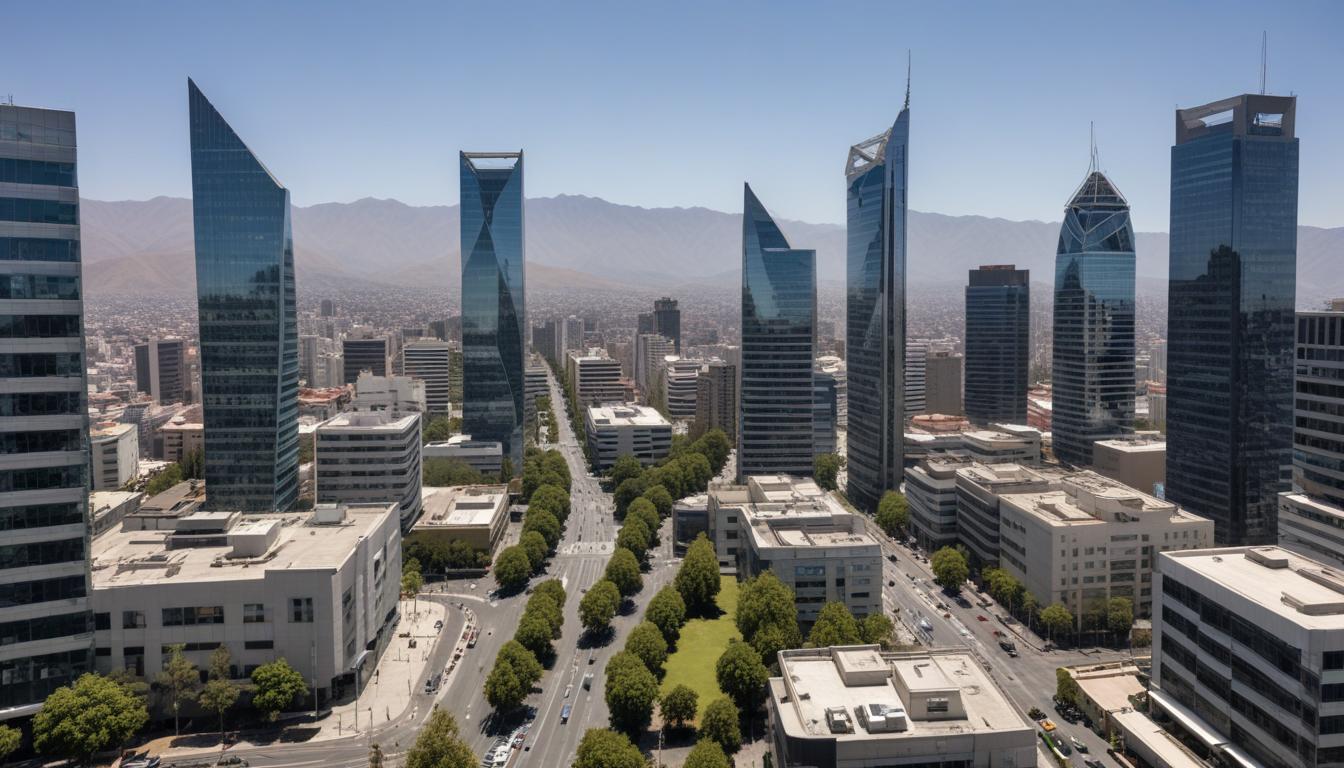
The Santiago commercial property market is experiencing a decisive realignment, and those who understand the new rules are positioning themselves for substantial gains. After three years of uncertainty about office viability, a clearer picture has emerged: demand hasn't disappeared—it has simply fragmented into smaller, more specialized requirements.
The numbers tell a compelling story. Average office lease rates in the Lastarria and Bellavista corridors have softened to $18–22 per square meter monthly, down from $26–28 in 2023. Simultaneously, premium micro-offices and collaborative spaces in the same neighborhoods are commanding $28–32 per square meter, with waiting lists extending months ahead. The divergence is stark and instructive.
Early movers have already locked in advantage. Several boutique property firms have acquired older mid-rise buildings along Avenida Providencia and converted entire floors into modular office pods, meeting rooms, and event spaces rather than fighting for traditional long-term tenants. One Santiago-based developer has reported occupancy rates above 85% in its converted properties, compared to 62% across conventional office stock in the same zone.
The real opportunity, however, lies in adaptive reuse. As retail continues its structural decline, several commercial property holders are experimenting with mixed-use conversions—combining office flexibility with ground-floor hospitality and retail activation. A notable case: a formerly struggling shopping center in the Ñuñoa district shifted its upper floors into short-term office memberships and co-working facilities, while bringing in F&B and wellness operators downstairs. Foot traffic and lease revenue both recovered significantly within eighteen months.
Service providers are equally positioned to benefit. Companies offering property management, flexible lease administration, and rapid buildout services have seen demand surge. Telecommunications and cybersecurity firms supplying distributed workforce infrastructure have similarly expanded their Santiago operations and client rosters.
What remains striking is the uneven adoption curve. Larger, established landlords holding premium properties in Sanhattan continue to operate under older assumptions—pushing for extended occupancy agreements and resisting modular arrangements. Smaller, more nimble operators are eating their lunch by embracing volatility and offering exactly what the modern workforce needs: flexibility without lengthy commitment.
The broader lesson: in Santiago's commercial property market today, the constraint isn't demand. It is willingness to abandon the old playbook. Those who have already done so are thriving.
This article was compiled by AI from the sources linked above and screened before publishing. See our editorial standards.