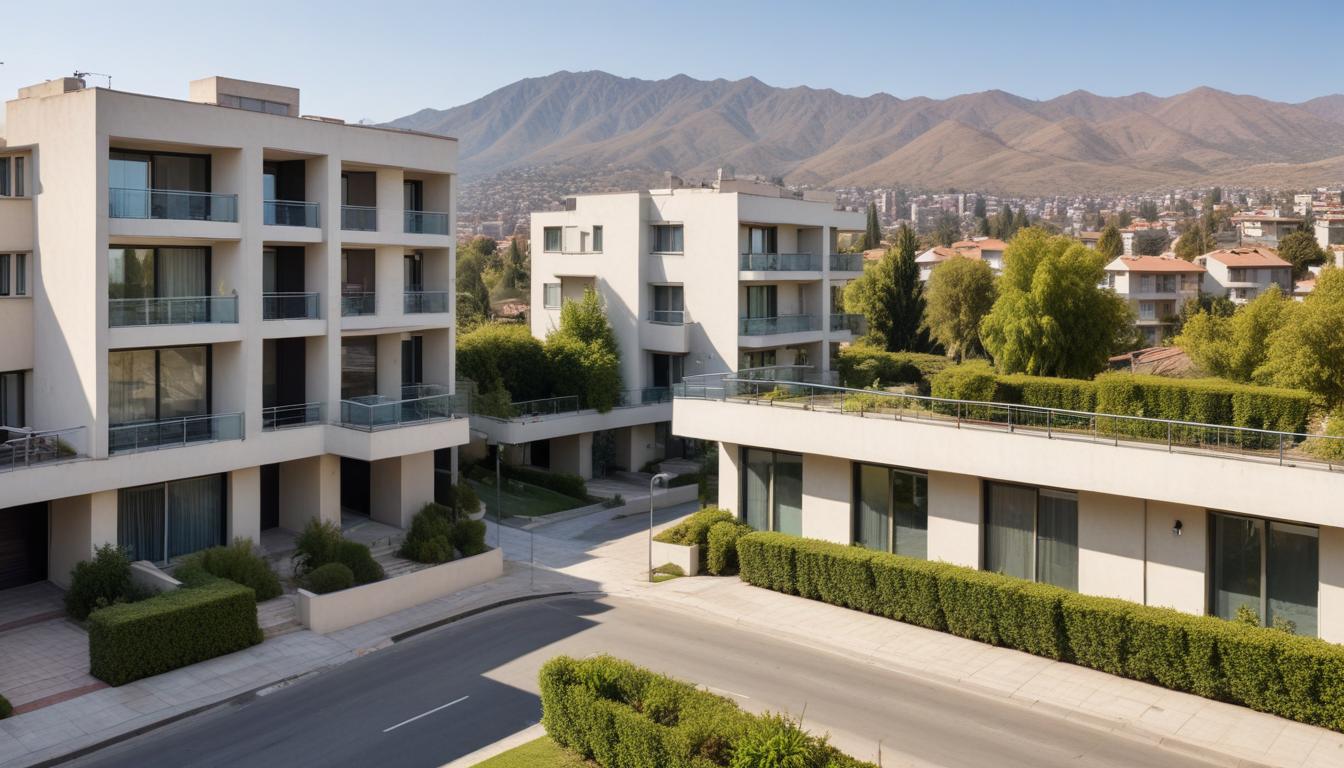
Santiago's property market has long danced to the rhythm of regulation. But the zoning amendments adopted across metropolitan zones this year are proving unusually consequential, triggering measurable shifts in buyer behaviour and suburb valuations that extend far beyond traditional investment hotspots.
The densification permits now flowing through Providencia and Ñuñoa—corridors that have historically capped mid-rise development—have already altered the neighbourhood calculus. Properties within 300 metres of Avenida Providencia and around the Estación Ñuñoa precinct have seen investor enquiries spike by an estimated 40 per cent compared to last year's baseline, according to local agents. These aren't speculators chasing headlines; they're calculating the long-term yield uplift from permitted floor-area ratios that previously capped neighbourhood density.
The impact on pricing reflects this shift. While Las Condes and Vitacura remain Santiago's premium anchors—sitting comfortably above CLP 120M per square metre in prime addresses—secondary neighbourhoods are experiencing genuine revaluation. Providencia properties that traded at CLP 80–90M per square metre twelve months ago are now commanding 12–15 per cent premiums where development pipelines align with zoning clarity.
But not all policy changes boost value. The introduction of stricter parking ratios in mixed-use zones has chilled investor sentiment in Maipú and Quilicura, where developers had relied on lean compliance strategies. Several off-market transactions in those corridors reportedly stalled after the transport ministry's June directive took effect, suggesting a recalibration period ahead.
Foreign buyers—increasingly visible in Santiago's market—are particularly attentive to planning architecture. Multiple agents report that international purchasers now request detailed zoning maps and long-range masterplans before committing. This sophistication is reshaping negotiation dynamics, especially in emerging zones where policy visibility can convert hesitant interest into firm bids.
The Barrio Italia precinct offers a textbook case. Recent heritage protection designations have paradoxically stabilised prices—cafés, galleries and cultural anchors along Lastarria and surrounding streets now command scarcity premiums. Investment here reflects not supply expansion but cultural policy locking in neighbourhood character.
For buyers navigating Santiago's suburban landscape in mid-2026, the lesson is clear: zoning policy is no longer background noise. Understanding municipal masterplans, forthcoming transport corridors and density permissions is as essential as neighbourhood walkability or school proximity. Neighbourhoods aren't just where you live anymore—they're regulated assets whose value trajectories depend heavily on what comes next from La Moneda and municipal planning offices.
This article was compiled by AI from the sources linked above and screened before publishing. See our editorial standards.