Why Santiago Property Prices Are Climbing and What Savvy Landlords Must Know Right Now
Foreign capital, limited supply, and shifting tenant demand are reshaping investment yields across the capital—here's what the numbers reveal.
Foreign capital, limited supply, and shifting tenant demand are reshaping investment yields across the capital—here's what the numbers reveal.
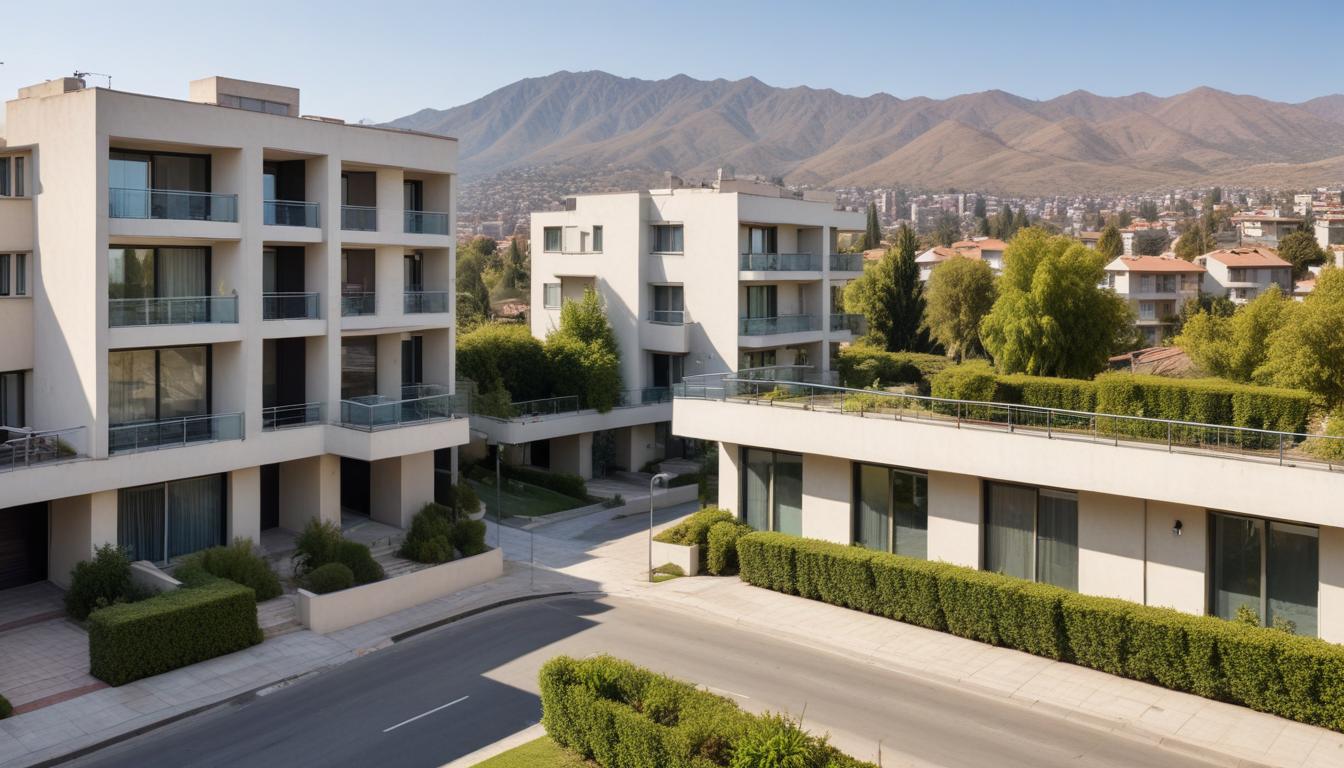
Santiago's investment property market is experiencing a quiet realignment. While the city's average property price hovers near CLP 85 million, what matters most to landlords isn't the headline figure—it's understanding what's actually moving the needle on yields and tenant demand in 2026.
Three factors are reshaping the landscape. First, foreign buyer interest has accelerated noticeably, particularly in Las Condes and Vitacura, where international investors are competing harder for premium stock along Avenida El Bosque and around the financial district near Costanera Center. This competition has lifted prices in these neighbourhoods, but yields remain compressed. Second, supply constraints in desirable pockets have become acute. New residential development has slowed compared to previous cycles, tightening availability precisely where demand is strongest. Third, tenant preferences have shifted. Young professionals and expatriate families increasingly favour established neighbourhoods with proximity to employment hubs and amenities—Providencia and Ñuño remain popular for their walkability and established commercial bases, while growth suburbs like Maipú and Quilicura attract families seeking value.
For landlords evaluating opportunities now, several realities demand attention. In premium zones, expect lower gross yields (typically 3-4 percent) but stronger capital appreciation and lower vacancy risk. Mid-market properties in Providencia or Ñuño offer more balanced returns—yields around 4.5-5.5 percent with steadier tenant demand. Growth corridors like Quilicura present higher yields (5-6 percent) but require active management and patience for price appreciation.
Regulation is another critical lens. Property tax discussions and potential tenant protection reforms are circulating in policy circles. Landlords should anticipate tighter compliance requirements and factor compliance costs into projections. Additionally, the shift toward formal rental agreements and deposit protections is already underway—properties managed professionally command slight premiums among quality tenants.
The clearance rate story also matters. Recent trends show selectivity among buyers, suggesting the days of rapid turnover have cooled. This means properties must be competitively positioned. Focus on fundamentals: location relative to Metro stations, school quality for family-oriented neighbourhoods, and building condition.
For investors entering now, the calculus is straightforward: avoid overpaying for prestige in saturated premium zones. Instead, identify secondary locations with emerging infrastructure—properties near future Metro extensions or commercial development corridors can deliver stronger long-term returns. Equally, understand your tenant profile. A studio in Las Condes serves corporate expats; a three-bedroom in Ñuño serves families. Mismatch yields disappointment.
The market isn't contracting, but it's maturing. Informed buyers—those who understand local dynamics rather than chasing headlines—will find opportunity in disciplined selection.
This article was compiled by AI from the sources linked above and screened before publishing. See our editorial standards.
How does this story make you feel?
Spread the word
About this article
Published by The Daily Santiago
Daily brief
Free, in your inbox before 7am. Weekdays.
More in Property


