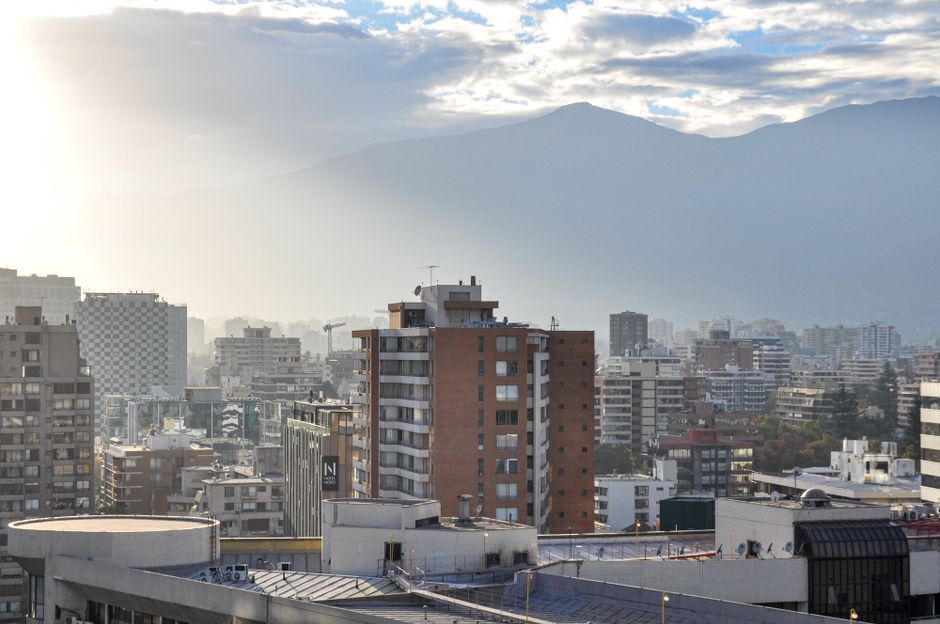
Santiago's construction approval pipeline is entering its most ambitious phase in a decade, with major developments now reshaping neighborhoods across the capital and fundamentally altering what homebuyers can expect to find—and afford—in different districts.
The Municipal Construction Department approved 47 significant residential projects in the first half of 2026, with particularly dense activity clustered around Providencia and Ñuñoa, where mid-rise apartment complexes are rising along Avenida 11 de Septiembre and surrounding commercial corridors. These projects, ranging from 120 to 380 units each, are introducing a new housing typology to traditionally single-family neighborhoods: compact, efficiently-designed apartments priced between CLP 95M and CLP 160M—roughly 12-15% below comparable penthouses in Las Condes.
The shift carries real implications. Providencia, long positioned as an upper-middle residential enclave, is experiencing intensified density that residents describe as transformative. Three new developments near the Parque Forestal perimeter have already altered foot traffic patterns and sparked discussions about infrastructure capacity—particularly water management and school enrollment in the district's saturated private education sector.
More intriguing is the outer-ring momentum. Maipú and Quilicura are witnessing accelerated approvals, with 34 new projects green-lit across both neighborhoods in recent months. These aren't luxury developments. They're pragmatic housing—two and three-bedroom units starting at CLP 65M—designed for younger families and first-time buyers priced out of central locations. A recent Cámara Chilena de la Construcción report notes that 71% of first-time buyers now actively explore neighborhoods beyond the traditional premium zones.
For investors, the pattern is clear: neighborhoods where construction approvals are clustering tend to see stabilization in price growth within 18-24 months, as new supply moderates speculation. Conversely, neighborhoods with limited approved pipeline—parts of Vitacura and certain Las Condes segments—continue experiencing stronger year-on-year appreciation.
The foreign buyer factor deserves mention. International purchasers, representing roughly 8% of Santiago's residential market in 2026 (up from 3% five years ago), tend to favor move-in-ready properties. Consequently, developers are increasingly completing units for immediate sale rather than pre-sale models, accelerating market absorption.
The takeaway: Santiago's residential landscape is stratifying by development density. Premium neighborhoods are consolidating exclusivity through restricted approvals. Growth districts are professionalizing. And middle-market neighborhoods face a critical transition—becoming denser, more mixed-income, and fundamentally different in character. For current residents and prospective buyers, understanding your area's approved pipeline has become as essential as understanding current pricing.
This article was compiled by AI and screened before publishing. See our editorial standards.