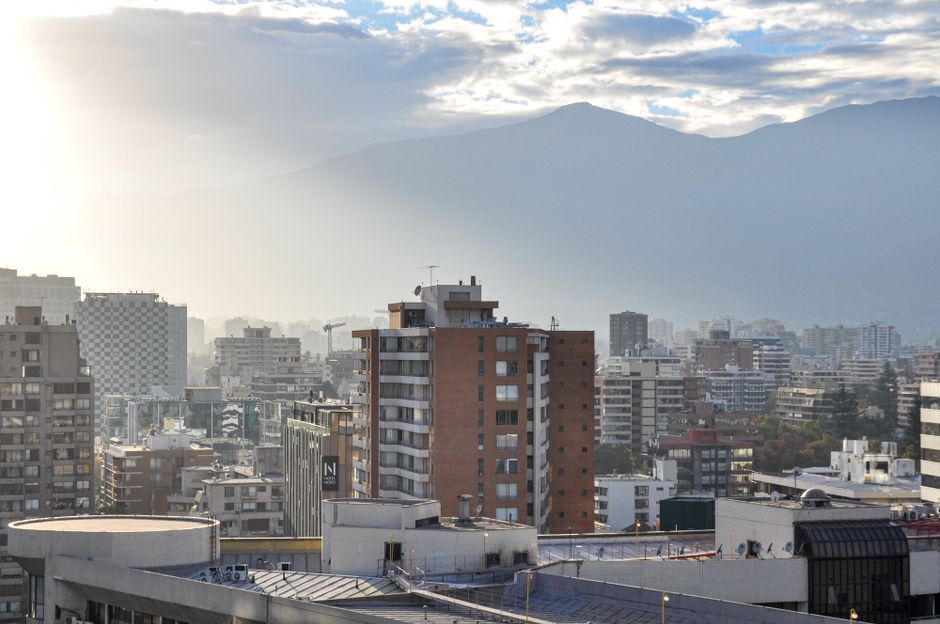
Santiago's property market is experiencing a quiet but significant realignment. While the city's average price hovers around CLP 85 million, neighbourhood-level dynamics tell a far more nuanced story—one shaped by supply constraints, infrastructure investment, and a notable influx of foreign capital that's reshaping buyer priorities.
Providencia remains the city's most sought-after middle-ground, with properties along Avenida 11 de Septiembre and near Parque Bustamante commanding premiums that reflect both heritage charm and proximity to metro connectivity. Yet this desirability masks a critical issue: limited new inventory. Historic building stock and strict heritage regulations mean sellers hold considerable leverage, with asking prices increasingly reflecting scarcity rather than underlying fundamentals. For buyers, this translates to tighter negotiating positions and fewer alternatives—a reality reshaping how investors approach the neighbourhood.
The real story, however, lies in the eastward expansion. Maipu and Quilicura's rapid price appreciation—outpacing central neighbourhoods over the past 18 months—stems from tangible infrastructure development rather than speculation alone. New metro extensions, improved connectivity via Alameda, and proximity to growing commercial hubs around Parque Arauco have attracted both local families and international investors seeking value-for-space. A comparable property in these zones runs 25-30 percent lower than equivalent footage in Las Condes or Vitacura, yet offers comparable accessibility to the city's core employment centres.
What's changing buyer behaviour most dramatically is foreign investment patterns. International purchasers—increasingly drawn by Chile's political stability and the weakened peso—are rethinking traditional luxury hotspots. Some are bypassing Las Condes altogether, instead targeting Ñuñoa's cultural appeal and university-adjacent neighbourhoods, where rental yields on student accommodation outperform traditional residential appreciation.
For buyers navigating this environment now, three principles matter. First, distinguish between price appreciation driven by scarcity (Providencia) versus infrastructure-backed fundamentals (Maipu corridor). Second, consider rental yield alongside capital growth—neighbourhoods attracting younger, transient populations near Universidad de Chile and Pontificia Universidad Católica are seeing tighter rental markets. Third, foreign exchange considerations are reshaping timelines; international buyers locking in purchases now benefit from currency positioning, a factor that's accelerating decisions across all price bands.
The neighbourhood most worth watching isn't a traditional trophy zone. Macul, bridging the gap between central accessibility and peripheral value, is beginning to attract both young professionals and institutional investors seeking reasonable entry points with genuine growth catalysts. As Santiago's real estate matures beyond simple central-versus-outer geography, buyers who understand these underlying drivers—not just headline prices—will make smarter decisions.
This article was compiled by AI and screened before publishing. See our editorial standards.