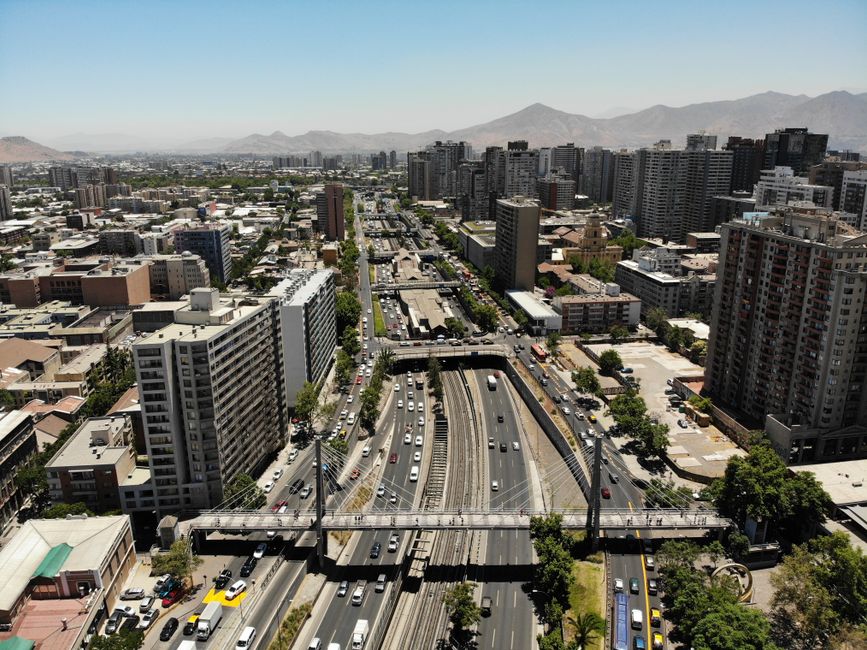
Santiago's municipal government has greenlit an ambitious transportation restructuring that could reshape daily life for millions of commuters, as the city council voted 32-8 on Monday to approve Phase One of the Metro expansion and bus rapid transit network linking the capital's outlying neighbourhoods to central employment hubs.
The $847 million initiative, funded through a combination of municipal bonds and national infrastructure grants, prioritises three high-traffic corridors: the extension of Line 7 through Maipú and into Lampa, enhanced bus lanes on Avenida Grecia connecting Los Condes to the airport, and a new dedicated transit route through Puente Alto—home to roughly 650,000 residents whose commutes currently average 92 minutes during peak hours.
For residents working in the financial district or attending university across Santiago, the implications are substantial. Market research firm Apoyo Consultoría estimates the improvements could reduce average commute times by 24 minutes within three years, freeing up approximately 18 million hours annually that Santiago's working population currently loses to traffic. That translates to economic value the city calculates at roughly 2.3 billion pesos in recovered productivity.
"This isn't just about convenience," said a transport economist familiar with the project. "When a single parent in Puente Alto saves an hour daily on commuting, they gain time with their children and energy for second jobs or education."
The plan also addresses affordability. Currently, a monthly Metro pass costs 35,900 pesos—consuming approximately 14% of minimum wage earners' income. The new budget includes fare subsidies for low-income riders, reducing costs by 18% for cardholders earning under 600,000 pesos monthly, benefiting an estimated 380,000 residents.
Not all councillors embraced the package. Opposition members raised concerns about construction disruption on Avenida Santa María and questioned whether projected ridership numbers justify the investment. Environmental groups, however, lauded emissions reductions modelled at 156,000 tonnes of CO2 annually once full implementation occurs.
Implementation begins August 2026, with Metro Line 7's extension reaching Lampa by late 2029. The bus rapid transit corridors are scheduled for completion by mid-2028. City officials have established a community oversight board comprising neighbourhood representatives to monitor construction impacts and spending accountability.
Santiago residents can expect the first visible changes—bus lane installations and preliminary Metro site surveys—within eight weeks.
This article was compiled by AI from the sources linked above and screened before publishing. See our editorial standards.