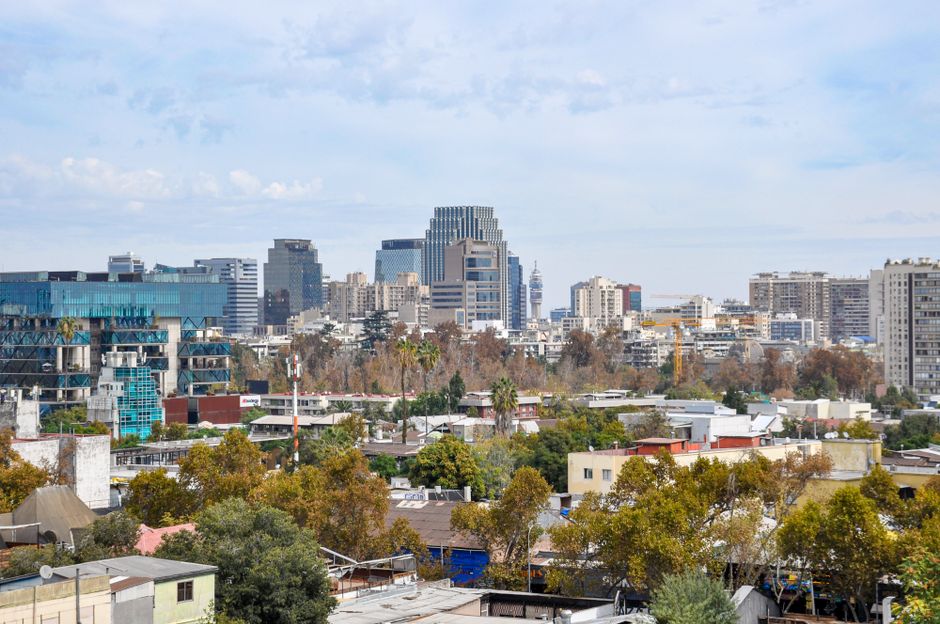
Maipu has long occupied an interesting middle ground in Santiago's property hierarchy. Sitting between the premium enclaves of Las Condes and Vitacura to the east and the emerging residential appeal of Providencia to the northeast, it has historically attracted price-conscious families and investors seeking value outside the capital's most established zones. But 2026 tells a different story.
The neighbourhood's skyline is changing fast. Three major developments currently under construction—including a 28-storey mixed-use tower near Avenida Pajaritos and a retail-residential complex along Avenida Sazie—signal developer confidence that Maipu's moment has arrived. Together with smaller residential projects scattered across Quinta Normal's proximity, these works are reshaping how the zone functions economically and socially.
Property values reflect this momentum. Average prices in Maipu hover around CLP 45–55 million for a two-bedroom apartment, roughly half the citywide average of CLP 85 million, but momentum is visible. Over the past eighteen months, comparable units have appreciated 8–12 percent, outpacing broader market growth. Foreign buyers—particularly from Argentina and Peru—have become notably more active here, attracted by relative affordability and proximity to metro connections.
The infrastructure angle matters enormously. Improved metro accessibility along Line 5, combined with planned pedestrian zones and retail clustering, is reshaping Maipu's urban character. What was once purely residential is becoming mixed-use and increasingly walkable. The Pajaritos-Sazie corridor, in particular, is attracting younger professionals and small businesses priced out of central neighbourhoods.
But development comes with friction. Long-time residents express concern about rising property taxes and rental costs as the neighbourhood gentrifies. While newer construction targets middle-income buyers (CLP 50–70 million range), existing renters face pressure. Community organisations have flagged the need for affordable housing provisions in new projects—a conversation that mirrors broader debates in Providencia and Nunoa.
For investors, the calculus is clear: Maipu offers growth potential at entry-level prices, with catalysts (infrastructure, new retail, foreign buyer interest) already in motion. The construction timeline matters—most projects complete between 2027 and 2028, meaning near-term capital appreciation potential exists before the market fully prices in the neighbourhood's transformation.
The question investors should ask isn't whether Maipu will appreciate, but how much, and over what timeframe. Early movers capturing current pricing may see meaningful returns within three to five years. But they're also betting on a neighbourhood in flux—one where new development is simultaneously its greatest asset and its greatest uncertainty.
This article was compiled by AI from the sources linked above and screened before publishing. See our editorial standards.